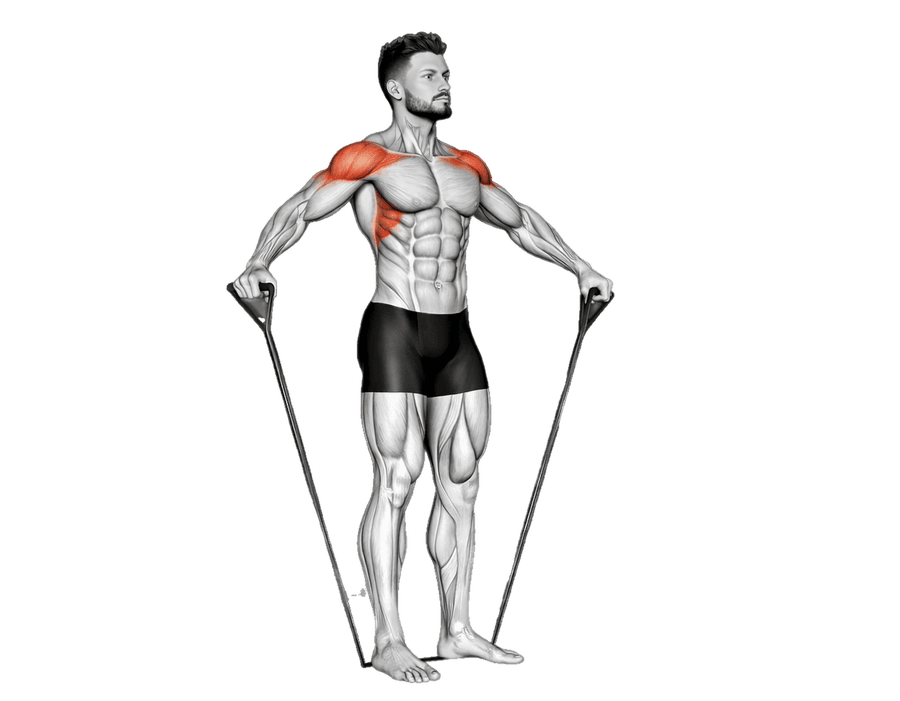
Arthralgia-Dominant
Multi-joint aches and stiffness. Responds to graded strength and daily mobility.

If joint pain, stiffness, and random tendon problems arrived alongside perimenopause, you're not imagining it. In 2024 researchers finally gave the pattern a name. Movement is its first-line treatment.
Clinically reviewed · Loosn Specialist Network · Updated June 2026
In 2024, researchers led by Dr Vonda Wright formally named a pattern clinicians had been seeing for decades: the musculoskeletal syndrome of menopause. It bundles together the joint pain, tendon problems, accelerating muscle loss, and raised frozen shoulder risk that arrive as oestrogen falls. There are oestrogen receptors throughout your muscles, tendons, ligaments, and cartilage, so when levels drop, the whole system feels it.
Naming it matters because for years these symptoms were dismissed as simply getting older, treated joint by joint, or missed entirely. The evidence-backed first-line response is progressive strength training and graded loading, which addresses the muscle, bone, and tendon changes together. Decisions about HRT sit with you and your clinician, and movement works alongside either choice.
Different drivers need different programmes. The quiz works out which is yours.
Multi-joint aches and stiffness. Responds to graded strength and daily mobility.
Tendinopathies that flare with load spikes. Needs slower, isometric-led progressions.
Accelerating muscle loss. Needs progressive resistance, the sooner the better.
Filtered from Loosn's library of 372 exercises. Each comes with 3D guidance and real-time form feedback in the app.
Whole-body strength
Upper body strength
Tendon-friendly load


Get the app on your phone and meet Kai. Kai builds your Movement Profile and matches you to the right programme.


Kai adapts every session to your pain, sleep & energy. Slept badly? Gentler flow. Feeling strong? Kai pushes further. Like a physio who knows you.

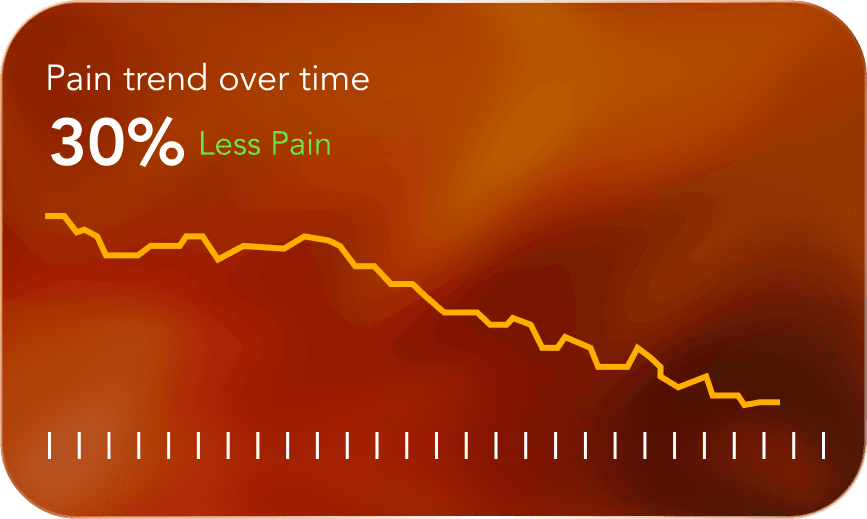
13 minutes a day. Exercises with real-time form correction, breathwork, and pain education. Watch your pain trend drop week by week.
Weeks 1-3
Isometrics and gentle range. Pain sensitivity settles and your starting strength is measured.
Weeks 4-8
Load increases steadily. Joint pain typically eases as the tissues around the joints strengthen.
Weeks 9-12+
Bone-stimulating impact work and heavier strength. This phase is about the next 30 years.
Loosn is built for common MSK pain. See a GP or urgent care promptly if you have any of the following:

No. The pattern tracks the hormonal transition, not the calendar, which is why it can arrive in your mid-40s while your 70-year-old mother has fewer aches than you. And because it has a mechanism, it has a treatment.
No. Progressive strength training is first-line on its own, and it works whether or not you take HRT. Whether HRT is right for you is a conversation with your clinician, and the movement work runs alongside either answer.
The shoulder capsule is connective tissue, and connective tissue carries oestrogen receptors. As levels fall, the capsule becomes more prone to the inflammation-then-contraction cycle, which is why frozen shoulder clusters in the same years.
The wrong dose can. That is why the first phase is isometric holds, which load a tendon without moving it, and why load rises gradually rather than all at once. Some soreness that settles within a day is the signal you want.

2-minute quiz. Personalised menopause MSK programme. First 14 days free.